
PPF vs ceramic coating in one sentence
Paint protection film stops rocks. Ceramic coating stops chemicals, UV, and water spots — and adds gloss. They're not competitors; they're built to handle different threats. Understanding what each one actually does is the difference between paying once and repainting body panels in five years.
| Spec | Paint Protection Film (PPF) | Ceramic Coating |
|---|---|---|
| Material | Self-healing clear urethane | Liquid SiO2 / SiC nano-coating |
| Thickness | ~8 mil (0.008 in) | ~1 micron (0.00004 in) |
| Stops rock chips | Yes — physical impact barrier | No |
| Self-healing scratches | Yes — 24–72 hrs | No |
| UV / chemical resistance | Excellent | Excellent |
| Hydrophobic / gloss boost | Mild | Strong |
| Lifespan / warranty | 10-year warranty (XPEL, 3M, SunTek) | 2–5 years |
| Typical cost (sedan) | $1,500 partial · $5,000+ full | $800–$2,000 |
What PPF actually is
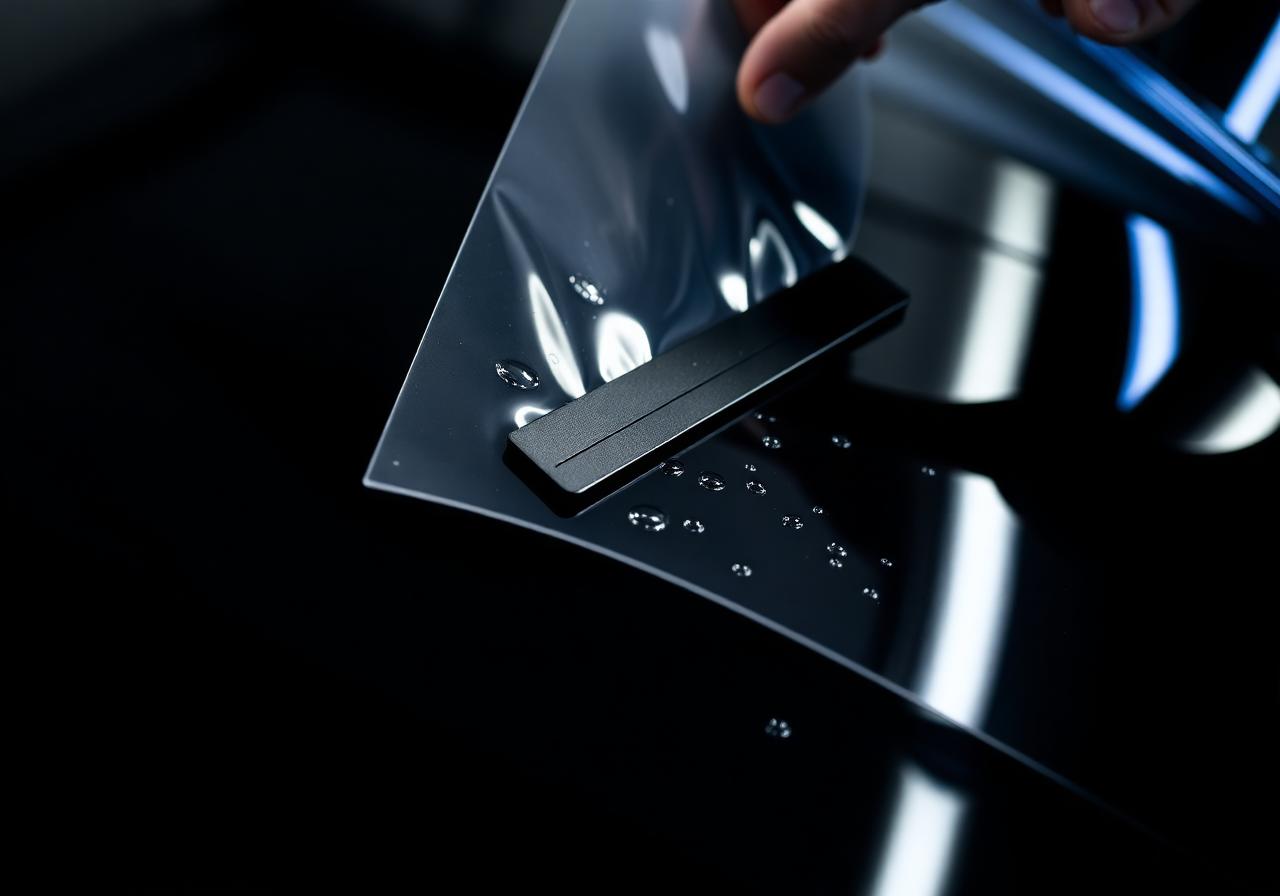
Paint protection film is a clear, self-healing urethane material — roughly 8 mil thick (about 200 microns). It physically absorbs the energy of rocks, gravel, sand, sap, bird droppings, and shopping carts. Light scratches in the top urethane layer relax back into shape with heat over 24–72 hours, which is why people call it "self-healing." It does not change the color of your paint; high-quality film is invisible from a few feet away.
The premium tier in 2026 is dominated by three brands: XPEL (Ultimate Plus, Stealth), 3M Pro Series, and SunTek Ultra. All three carry 10-year manufacturer warranties against yellowing, cracking, peeling, and delamination — and all three are widely available through professional installers in Maryland and the DC metro area.
What ceramic coating actually is
Ceramic coating is a liquid SiO2 (silicon dioxide) or SiC (silicon carbide) nano-coating that's applied by hand and then cures into a hard, glass-like layer about 1 micron thick. That bonded layer is hydrophobic — water beads up and rolls off, taking dirt with it — and it dramatically resists UV, bird droppings, tree sap, brake dust, and most everyday road chemicals. Coatings also visibly enhance gloss and depth.
The thing ceramic coating cannot do is stop a rock. At 1 micron, it's roughly 1/200 the thickness of PPF. Impact damage goes right through it. Ceramic is a chemical and environmental shield, not an impact shield.
How each one fails
PPF failure modes
- Edge lifting at sharp body lines if it wasn't wrapped properly during install.
- Yellowing from cheap, non-warrantied film (premium brands have UV stabilizers).
- Visible seams from poor planning — a good installer plans seams to hide along panel gaps.
- Hard-to-remove residue if low-quality film is left on past warranty life.
Ceramic coating failure modes
- Hydrophobic effect breaks down over time — water stops beading after 2–5 years.
- Improper prep (paint not decontaminated and polished) leads to imperfections sealed under the coating.
- Streaking and high spots if the installer doesn't level the coating during cure.
- No protection against rocks or aggressive abrasions — a coating won't save a hood from highway debris.
The best setup: layer them
The strongest protection package on a daily driver in Maryland — where I-270, I-95, and the Beltway throw constant gravel, salt brine, and tar — is layered:
- PPF on the impact zones — front bumper, hood, fenders, mirrors, headlights, and A-pillars. This is where 95% of rock-chip damage happens at highway speed.
- Ceramic coating over the entire vehicle, including over the PPF itself. The coating adds hydrophobics, gloss, and chemical resistance everywhere — and makes the PPF easier to wash and dramatically less likely to attract bug splatter and tar.
The cost-vs-repair math
A single repaint of a front bumper at a body shop typically runs $700–$1,500, and a full hood respray runs $1,000–$2,000. Two repainted panels in five years already cost more than a full PPF front-end package. Add resale value: PPF-protected vehicles consistently appraise higher because the original factory paint is preserved underneath.
How RBS Wraps & Tint installs PPF and coating
- Premium 10-year-warranty film — XPEL, 3M, or SunTek depending on package and customer preference.
- Wrapped edges on every panel where the geometry allows, so seams hide along panel gaps.
- Thorough decontamination, machine polish, and panel inspection before any coating goes down.
- Multi-year ceramic coating layered over the rest of the vehicle if you opt for the full package.
What's the difference between PPF and ceramic coating?
PPF (paint protection film) is a thick — about 8 mil / 0.008 inch — self-healing urethane film that physically absorbs rock chips, scratches, and minor abrasions. Ceramic coating is a thin liquid SiO2 nano-layer about 1 micron thick that bonds chemically to paint. Coating protects against UV, chemicals, and water spots — but it does not stop rock chips.
Do I need both PPF and ceramic coating?
If you want the best long-term protection, yes. The strongest setup is PPF on impact zones (front bumper, hood, fenders, mirrors, A-pillars) plus ceramic coating layered over the rest of the vehicle and even over the PPF itself. The film stops physical damage; the coating adds gloss, hydrophobics, and chemical/UV resistance everywhere.
How long does PPF last vs ceramic coating?
Premium PPF (XPEL Ultimate Plus, 3M Pro Series, SunTek Ultra) typically carries a 10-year manufacturer warranty against yellowing, cracking, and delamination. Professional ceramic coatings typically last 2–5 years before the hydrophobic effect breaks down — most need a top-up coat or full reapplication around year 3–5.
Can ceramic coating prevent rock chips?
No. Ceramic coating is roughly 1 micron thick — about 1/200 the thickness of PPF. It adds gloss, hydrophobics, and chemical/UV resistance, but it does not absorb impact. Rocks and road debris will still chip the paint underneath. For chip protection, you need PPF.
Does PPF self-heal?
Yes. The clear urethane top layer of premium PPF is engineered to relax back into shape under heat. Light swirl marks and surface scratches typically self-heal in 24–72 hours at ambient temperature, or within minutes if you pour warm water over the area. Deep cuts that go through the urethane layer don't heal — but those are rare and usually still don't reach paint.
How much does PPF cost vs ceramic coating?
Front-end PPF coverage (bumper, hood, fenders, mirrors) typically runs $1,500–$2,500. Full-vehicle PPF runs $5,000–$8,000+. Professional ceramic coating typically runs $800–$2,000 depending on package and durability tier. Both are dramatically cheaper than respraying body panels after rock-chip damage.